
What Your Go To Shades Say About You
Every shade you reach for carries emotional weight. It reflects mood, identity, memory, and sometimes even the version of yourself you’re becoming. Whether consciously or not, color is one of the most intimate decisions we make in beauty. This is the psychology behind it.
Why Color in Makeup Is So Powerful
Color psychology has long been studied in art, fashion, and design — but in makeup, it becomes deeply personal. Unlike clothing, makeup sits directly on the face. It frames expression. It influences how others perceive you and how you feel inhabiting your own skin.
A lipstick shade can:
- Shift confidence instantly
- Change how assertive or soft you feel
- Signal approachability or mystery
- Reflect safety, rebellion, nostalgia, or power
And the most telling detail? Most people return to the same colors again and again.
Nude & Neutral Tones : The Psychology of Subtle Power
Neutral lovers aren’t boring , they’re intentional.
People drawn to nudes, soft browns, taupes, beiges, and muted pinks often value:
- Control and balance
- Quiet confidence
- Effortlessness over performance
These shades communicate polish without demand. They allow features to exist without competition.
Psychologically, neutrals often represent:
- Emotional grounding
- A desire for harmony
- Self trust without external validation
Neutral makeup doesn’t ask for attention, it assumes it’s already there.


Red Tones : Confidence, Desire, and Emotional Visibility
Red is the most emotionally charged color in beauty.
It’s associated with:
- Power
- Desire
- Assertion
- Visibility
People who gravitate toward red often aren’t afraid of being seen, or they’re learning how to be.
Red makeup can indicate:
- A willingness to claim space
- Emotional courage
- Sensual self-awareness
It’s no coincidence that red lips have historically symbolized rebellion, sexuality, and authority all at once.
Red says: I am here, and I am choosing to be.


Pink Shades: Softness, Safety, and Emotional Expression
Pink often gets dismissed as youthful or sweet, but psychologically, it’s layered.
Those drawn to pink tones may value:
- Emotional openness
- Romantic optimism
- Gentleness and vulnerability
Pink can signal:
- A desire to feel held or seen
- Playfulness without cynicism
- Softness as strength
Depending on the shade, pink can move from innocence to sensuality, proving that softness and power aren’t opposites.


Dark & Smoky Shades: Mystery, Depth, and Emotional Boundaries
Charcoal, black, deep browns, plums, and greys speak to introspection.
These shades are often chosen by people who:
- Value emotional depth
- Feel more comfortable with boundaries
- Prefer complexity over simplicity
Dark makeup can represent:
- Protection
- Control over emotional exposure
- Artistic self expression
It’s not about hiding, it’s about curation. Dark tones allow distance while maintaining intensity.


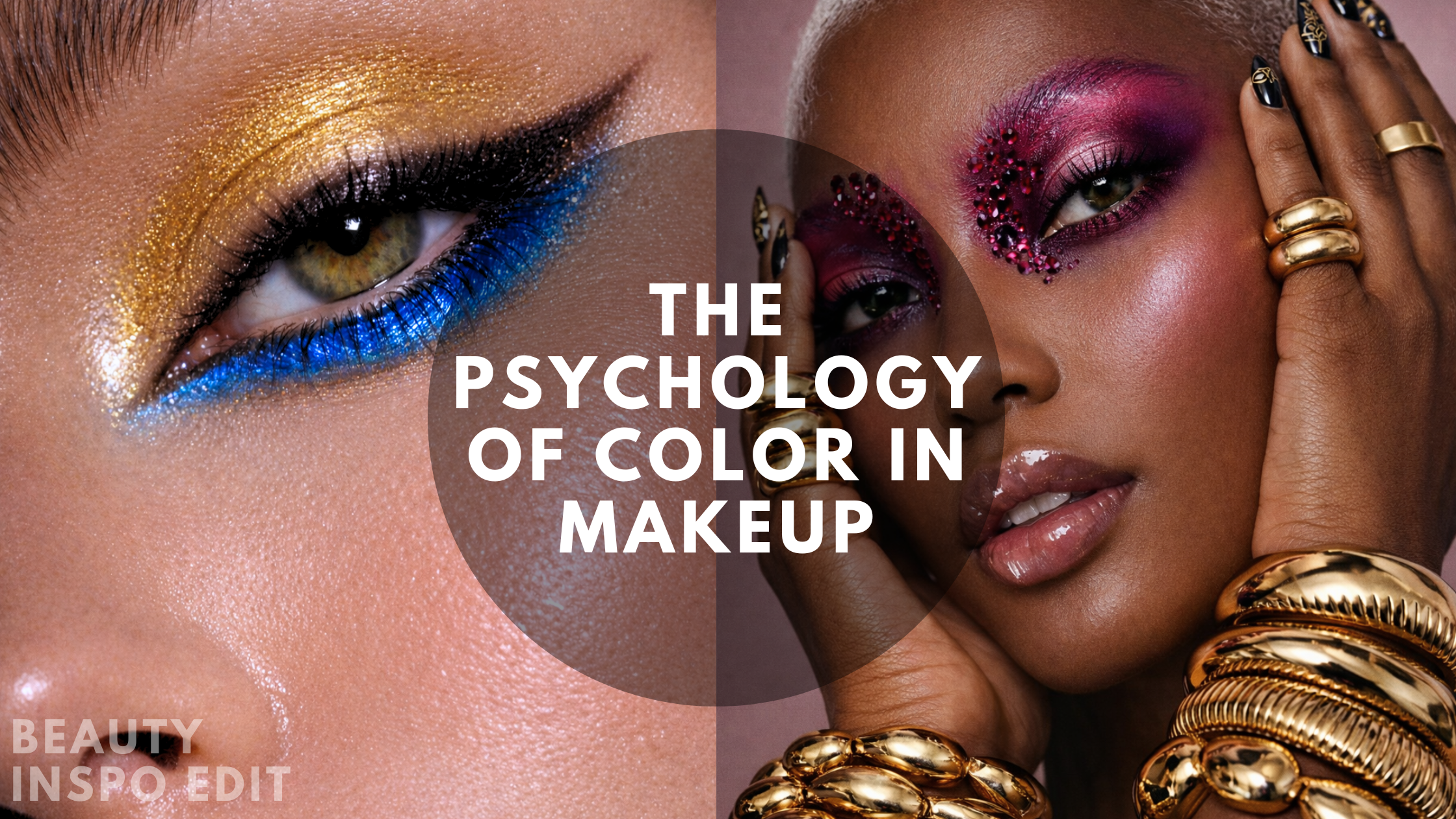
Bright & Unconventional Colors: Creativity, Rebellion, and Identity Play
Electric blues, greens, purples, and graphic color placements are rarely accidental.
These shades often indicate:
- Creative identity
- Comfort with experimentation
- Rejection of rigid beauty norms
Psychologically, bold color wearers tend to:
- Use makeup as expression, not correction
- Embrace change
- See beauty as art, not rules
Color becomes language, not decoration.


Why We Return to the Same Shades
Most people don’t choose colors at random. They return to the shades that feel emotionally safe, familiar, or affirming. Over time, these go to colors begin to reflect who you’ve been, what you’re healing, and the version of yourself you’re consciously or subconsciously trying to embody. As life shifts, so does your palette. That change isn’t accidental, it’s self perception evolving alongside experience.
Editorial Beauty & Color Storytelling
In editorial makeup, color is intentionally amplified to communicate emotion at a glance. A single hue can suggest strength, vulnerability, fantasy, or authority without a single word being spoken. This is why editorial beauty often feels cinematic. It’s visual storytelling through pigment, mood, and contrast. Understanding color psychology is what elevates makeup from technical application to expressive art.
The next time you reach for a familiar shade, pause and take notice. Ask yourself what that color gives you emotionally and which version of yourself it supports. Because makeup has never been just about how you look, it’s about how you feel when you allow yourself to be seen.